OSHA

Advanced Diploma

Awarding Body

OSHAA

Duration

30-Hour

Course Category

Safety and Health

study mode

Online Learning

Course overview

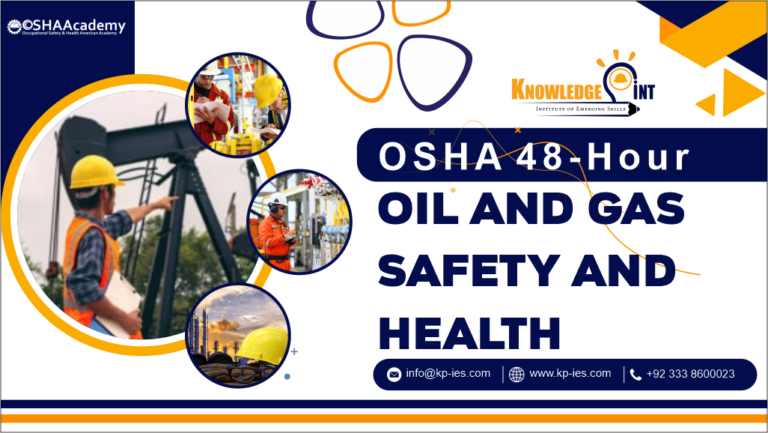
The OSHA Advanced Diploma in Oil and Gas Safety and Health is a comprehensive program designed to provide workers, supervisors, and safety professionals with expert-level knowledge and practical skills to identify, assess, and manage hazards in the oil and gas sector. Building on foundational OSHA training, this advanced diploma emphasizes the unique risks, regulatory requirements, and best practices specific to oil and gas operations. It is ideal for employees, field workers, supervisors, and safety managers seeking an in-depth understanding of occupational safety and health within the industry.

This intensive program covers critical topics including hazard recognition, risk assessment, emergency response, fire safety, industrial hygiene, personal protective equipment (PPE), and OSHA regulatory compliance. Participants engage in interactive workshops, scenario-based exercises, and case studies to develop practical skills in accident prevention, proactive hazard management, and workplace safety strategy implementation. The course provides a thorough overview of general industry safety standards alongside oil and gas-specific considerations, preparing learners to apply effective safety measures and ensure compliance across operations.

Upon completion of the OSHA Advanced Diploma, participants gain advanced technical expertise, leadership skills, and decision-making capabilities to foster safer work environments. The program enables organizations to reduce workplace incidents, strengthen safety culture, and improve operational efficiency. It is a vital qualification for anyone committed to achieving excellence in oil and gas safety and occupational health management.
OSHAA

Approved Training centre of OSHAA

For OSHAA Qualifications

Entry Requirments

Entry Requirements for the OSHA Advanced Diploma

  • Educational Qualifications:Minimum of a high school diploma or equivalent. Candidates with technical, vocational, or industry-related education in oil, gas, or industrial sectors are preferred.
  • Professional Experience:Prior experience in oil and gas operations, construction, or occupational safety is recommended but not mandatory. The course is suitable for both beginners and professionals seeking advanced knowledge in safety management.
  • English Language Proficiency:Since the program is delivered in English, learners must show competence in reading, writing, and communication.

The OSHA Advanced Diploma qualification consists of 12 mandatory units.

Study Units for OSHA Advanced Diploma:

Unit 1: Foundations of Advanced Occupational Safety

  • Overview of advanced safety management principles
  • Integration of safety into organizational culture
  • Critical analysis of historical safety incidents and lessons learned

Unit 2: In-Depth Analysis of OSHA Regulations

  • Advanced interpretation of OSHA regulations
  • Navigating complex compliance standards
  • Case studies on legal implications and enforcement actions

Unit 3: Advanced Safety Management Systems

  • Designing and implementing sophisticated safety management frameworks
  • Systems thinking in safety to enhance organizational integration
  • Continuous improvement strategies for safety systems

Unit 4: Strategic Risk Management

  • Advanced risk identification, assessment, and prioritization techniques
  • Developing and implementing strategic risk management plans
  • Case studies on effective risk mitigation strategies

Unit 5: Advanced Incident Investigation and Analysis

  • In-depth incident investigation methodologies
  • Root cause analysis at an advanced level
  • Developing and implementing preventive measures based on incident analysis

Unit 6: Emergency Preparedness and Crisis Management

  • Advanced emergency response planning
  • Crisis management strategies for unforeseen events
  • Coordinating crisis response teams and resources

Unit 7: Advanced Safety Auditing and Performance Measurement

  • Conducting advanced safety audits using comprehensive methodologies
  • Implementing performance measurement metrics for continuous improvement
  • Benchmarking against industry best practices

Unit 8: Legal and Ethical Considerations in Safety

  • Exploring ethical considerations in safety decision-making
  • Navigating legal frameworks related to occupational safety
  • Case studies on ethical dilemmas in safety management

Unit 9: Occupational Health and Industrial Hygiene at an Advanced Level

  • Advanced understanding of occupational health hazards
  • Implementation of industrial hygiene measures for complex environments
  • Strategies for protecting workers from health risks

Unit 10: Leadership in Safety Excellence

  • Developing advanced leadership skills for safety management
  • Effective communication strategies to promote safety at all levels
  • Influencing organizational culture towards safety excellence

Unit 11: Networking and Collaboration in Safety

  • Establishing and maintaining professional connections with industry leaders
  • Participating in collaborative efforts for industry-wide safety initiatives
  • Leveraging networks for continuous learning and knowledge exchange

Unit 12: Continuous Professional Development in Safety

  • Demonstrating a commitment to continuous learning and improvement
  • Staying informed about industry changes and emerging safety challenges
  • Pursuing opportunities for ongoing professional development

Unit 13: Global Perspectives in Occupational Safety

  • Understanding and addressing safety challenges in a global context
  • Implementing safety measures that align with international standards
  • Case studies on successful global safety initiatives

Unit 14: Capstone Project – Practical Application of Advanced Safety Principles

  • Applying advanced safety principles to real-world scenarios
  • Developing and presenting a comprehensive safety project
  • Peer review and feedback on capstone projects

Unit 15: Final Assessment and OSHA Advanced Diploma Certification

  • Comprehensive review of course material
  • Final examination covering key concepts and principles
  • Awarding of OSHA Advanced Diploma upon successful completion

What you will Gain

Upon successful completion of the OSHA Advanced Diploma course, participants will demonstrate advanced proficiency in the field of occupational safety and health by achieving the following learning outcomes:

  1. Advanced Regulatory Knowledge:
    • Articulate a nuanced understanding of complex OSHA regulations and their implications for various industries.
    • Interpret and apply evolving compliance standards to ensure organizational adherence to the highest safety protocols.
  2. Comprehensive Safety Management:
    • Develop, implement, and evaluate sophisticated safety management systems tailored to the specific needs of diverse workplace environments.
    • Apply systems thinking principles to enhance the integration of safety practices within organizational structures.
  3. Strategic Risk Management:
    • Utilize advanced techniques to identify, assess, and prioritize workplace risks.
    • Design and implement effective risk management plans, incorporating proactive measures to mitigate potential hazards.
  4. Advanced Incident Investigation and Analysis:
    • Conduct thorough and advanced incident investigations, identifying root causes and contributing factors.
    • Implement advanced preventive measures based on comprehensive analysis to reduce the recurrence of incidents.
  5. Emergency Preparedness and Response Planning:
    • Develop and refine emergency response plans that address a wide range of potential scenarios.
    • Apply crisis management strategies to effectively respond to unforeseen events and safeguard the well-being of personnel.
  6. Sophisticated Safety Auditing and Performance Measurement:
    • Conduct advanced safety audits, utilizing comprehensive methodologies to assess organizational safety practices.
    • Implement performance measurement metrics for continuous improvement, aligning with industry best practices.
  7. Legal and Ethical Proficiency:
    • Navigate complex legal frameworks related to occupational safety and health.
    • Apply ethical considerations to safety decision-making processes, ensuring a principled approach to safety management.
  8. Occupational Health and Industrial Hygiene Mastery:
    • Demonstrate advanced knowledge of occupational health hazards and their potential impact on workers.
    • Implement sophisticated industrial hygiene measures to protect the health and well-being of employees.
  9. Leadership in Safety:
    • Develop leadership skills to effectively advocate for and drive a safety-centric culture within organizations.
    • Implement communication strategies to inspire and engage stakeholders at all levels in promoting a culture of safety.
  10. Expertise in Crisis Management:
    • Apply expert-level knowledge in crisis management, ensuring swift and effective response to emergencies.
    • Coordinate and lead crisis response teams with a focus on minimizing harm and ensuring organizational resilience.
  11. Networking and Collaboration:
    • Establish connections with industry leaders and professionals in the field of occupational safety.
    • Engage in collaborative efforts to stay informed about emerging trends and best practices within the safety community.
  12. Continuous Professional Development:
    • Demonstrate a commitment to continuous learning by staying abreast of industry changes and advancements.
    • Pursue opportunities for ongoing professional development to maintain a high level of expertise in occupational safety.

Want to know more?

This course is ideal for field workers, employees, supervisors, safety officers, and managers seeking advanced expertise in occupational safety and health in the oil and gas sector.

The program spans 30 hours or more, combining lectures, workshops, scenario-based exercises, and case studies for hands-on learning and in-depth knowledge development.

Yes, participants receive an OSHA-recognized Advanced Diploma, validating their expert-level competency in occupational safety and health for oil and gas operations.

Absolutely. Supervisors and managers gain expert knowledge to lead safety programs, implement OSHA standards, and manage occupational health effectively.

Yes, it aligns with OSHA standards and global best practices, making it highly valuable for oil and gas operations worldwide.

Lock In Your Spot

Similar Posts